
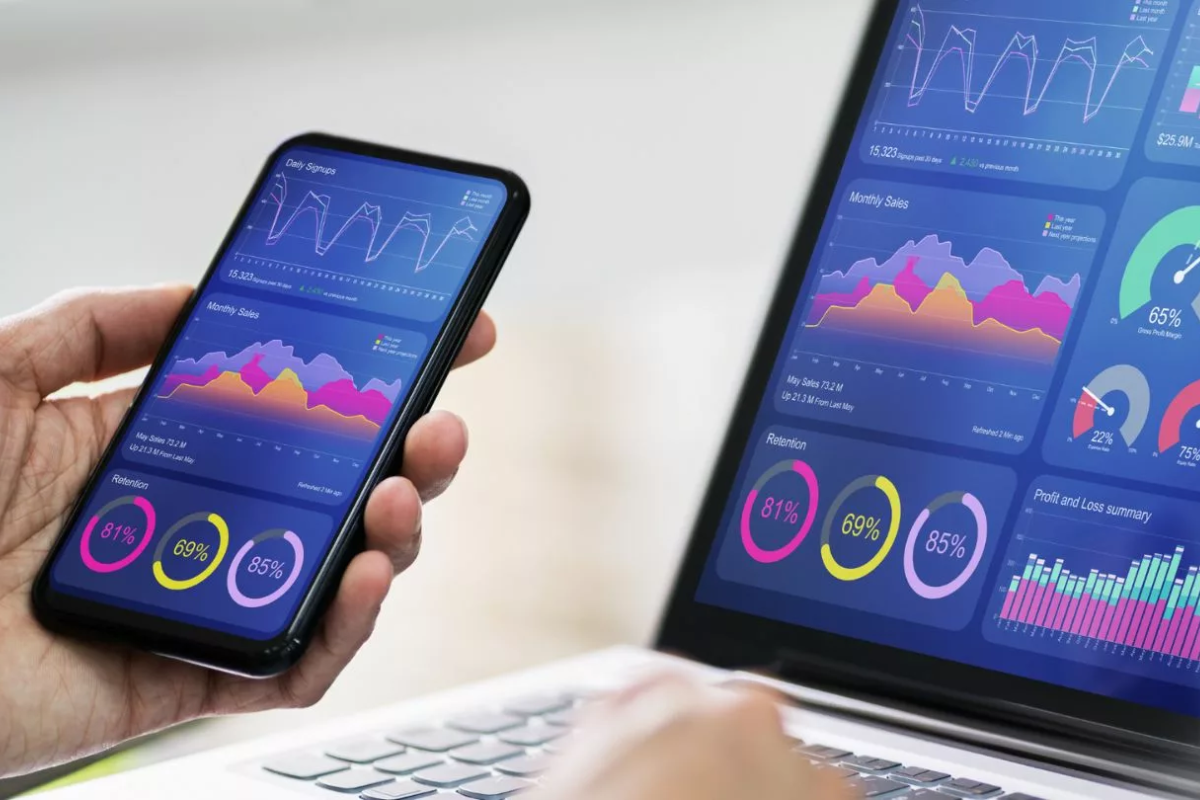
Let’s be real for a second—our phones have basically become our best friends. They’re in our hands when we wake up, they’re on the nightstand when we go to bed, and if we forget them at home well, the day feels like a mini tragedy. So it’s no surprise that mobile shopping has taken over the ecommerce world. But here’s the kicker: simply having a mobile-friendly store or app isn’t enough anymore. The real game-changer? Mobile app analytics.
The back pass of your shop where customers are up to something really gets to know what they are doing, what drives them to add things to an actual cart and what makes them run faster than a coward who just saw the price of concert tickets:
So, how would you deploy mobile app analytics for hyper-ecommerce performance-and perhaps even have a wee bit of fun in the process?
The Power of Mobile App Analytics
Here’s a quick reality check: more than half of online shopping happens on mobile app devices now. That’s not just a passing trend—it’s how people shop. We’re scrolling through sneakers during our commute, comparing skincare while watching Netflix, and buying birthday gifts from our phones five minutes before heading to the party.
But here’s the twist. While customers are happily tapping away on their screens, ecommerce businesses are losing billions (yes, billions) because of poor mobile experiences. That’s where mobile app analytics swoops in like a superhero in a cape. It’s not just about numbers; it’s about understanding real human behavior.
The Power of User Behavior Analytics
Imagine walking into a brick-and-mortar store knowing that the owner already had an intuition about what aisle you would go to, what you would take, and what you might ask. That is exactly what user behavior analytics does in your online store.
With mobile app analytics, you can literally see patterns: where customers spend the most time, which buttons they click, where they get stuck, and even when they’re likely to drop off. Maybe people are abandoning their carts on the shipping page—ouch. Or, they could be spending ten whole minutes on your new arrivals (yay!).
You’re not guessing any longer after you’ve unlocked these digital footprints: You’re able to make solid (and data-backed) decisions for enhancing sales and loyalty.
Tracking the Right Mobile Ecommerce Metrics
All right, here’s the big confession in mobile app analytics: not all data is helpful. It can be likened to going to a buffet; just because everything is there, it does not mean we have to load our plate with everything. Focus on the mobile ecommerce metrics that really matter.
A few of those to keep an eye on are:
- Conversion Rate- How many of those visitors actually put down some money and buy?
- Session Duration – Are customers sticking around or bouncing out faster than a bad date?
- Cart Abandonment Rate – The classic heartbreaker of ecommerce.
- Retention Rate – Are they coming back again or was it just a fling?
With measuring mobile performance, those metrics do not serve as random numbers for your business-they are its pulse.
Mobile Performance Tracking: Smooth Sailing or Rocky Roads?
The checkout is one of the worst places for an app to freeze. Very frustrating, isn’t it? Customers feel the same way. If something doesn’t work right, even slow load times or nonsensical layouts, they secretly kill the sale.
This is why mobile performance tracking becomes all the more important. It’s more than just speed; it’s creating an environment where an end-user faces no obstruction or frustration. You use the analytics to find the bottlenecks in performance, which devices or operating systems create the biggest havoc, and remedy these issues before they eat up your sales completely.
Ecommerce Analytics Tools That Make Life Easier
Now, you don’t need to reinvent the wheel here. There are plenty of ecommerce analytics tools designed to help you tap into your mobile data goldmine. Some focus on heatmaps, others on funnels, and some even track real-time behavior like where users’ thumbs hover before they tap (yes, that’s a thing).
But here’s the deal: tools alone won’t save your store. It’s how you use them. A chef doesn’t just stare at the knives—he chops, slices, and creates magic. The same goes for analytics. Combine the right ecommerce analytics tools with curiosity, creativity, and action, and you’ve got yourself a recipe for success
Turning Analytics Into Mobile Sales Insights
Numbers on a dashboard don’t mean much until you turn them into stories. But those tales transform into mobile sales insights, powerful little pieces that make you understand not just what happened with your business, but why.
For example, it may show that your mobile app analytics reveal that the shoppers aged 18 to 25 actually spend more during the weekends. It is not a number, but an opportunity. You can then conduct a weekend flash sale for this group, and boom your strategy now relies on your customers’ actual behavior.
Or, for instance, you could notice that people spend tons of time browsing but do not usually purchase something. That could be your cue to identify another need for clearer CTAs, improve product descriptions, or introduce free shipping thresholds. These insights are the compass guiding you toward higher sales.
Analytics for Online Store Growth: A Human-Centered Approach
It’s easy to get caught up in chasing numbers, but let’s not forget that behind every click is a human being.The analytics for online store’s growth should always come back to enhancing the customer’s journey.
It doesn’t matter that you track your bounce rates; all your customers care about is how smooth, personalized, and delightful their shopping experience feels. Analytics for mobile apps used with empathy not only increase sales but also develop trust and loyalty.
The Future of Mobile App Analytics in Ecommerce
Here’s the exciting part. We’re just scratching the surface with mobile app analytics. Soon, AI, machine learning, and personalization will develop analytics that can predict behavior on a customer’s part even before he or she takes an action. Imagine the store gently pushing customers towards products they love without feeling creepy. Such is our futuristic horizon.
But remember no matter how the technology advances, the basic factor will remain the same: knowing your customers and serving them better.
Wrapping It Up
Don’t keep treating mobile app analytics like some drab back-end task; it’s the secret sauce for understanding your customers, how best to improve performance, and moving casual browsers to diehard buyers.
Mobile performance tracking, user behavior analytics, or clever ecommerce analytics tools are common threads running through the very same goal – making shopping so simple, enjoyable, and personal that it can not fail to convert. And when that happens, the sale follows naturally.
If you want all this knowledge to be combined into one powerful user-friendly platform, there is one name I cannot forget: Shopify. Earning the honor of analytics and unlimited integrations is like securing the best co-pilot for the entire journey of e-commerce. Seriously, the day you get it right with analytics is the day you’ll wonder how you ever managed to keep your store running without it.
For more insights on ecommerce strategies, mobile shopping trends, and data-driven growth, visit 2MinuteRead.