

Every spring the same question comes up in the team group chat: metal or molded? The answer depends less on preference than on the league rules and the field you play on, and getting it wrong can mean a pair of cleats that is not allowed on game day. The good news is that many baseball cleats now come in several sole versions of the same shoe, so once you know which plate you need, choosing the shoe itself is simple.
The Three Sole Types Side by Side
| Metal spikes | Molded (TPU) | Turf | |
|---|---|---|---|
| Grip on grass and dirt | Highest | Strong | Light |
| Typical players | High school, college, adult leagues | Youth leagues and players who want one versatile pair | Practice, turf fields, coaches |
| Field types | Natural grass and dirt infields | Grass, dirt and some synthetic fields | Artificial turf, batting cages, warm-ups |
| Rules | Often banned at youth level | Allowed almost everywhere | Allowed almost everywhere |
Always check the league handbook before buying. If in doubt, a molded pair is the safe choice, and a turf baseball shoe makes a useful second pair for practice.
Low or Mid Cut
A low cut is lighter and freer around the ankle, which most infielders and outfielders prefer for quick first steps. A mid cut wraps higher and gives a more supported feel, which some catchers and pitchers like when they spend long innings in a crouch or driving off the mound. It comes down to feel; try both if you can.
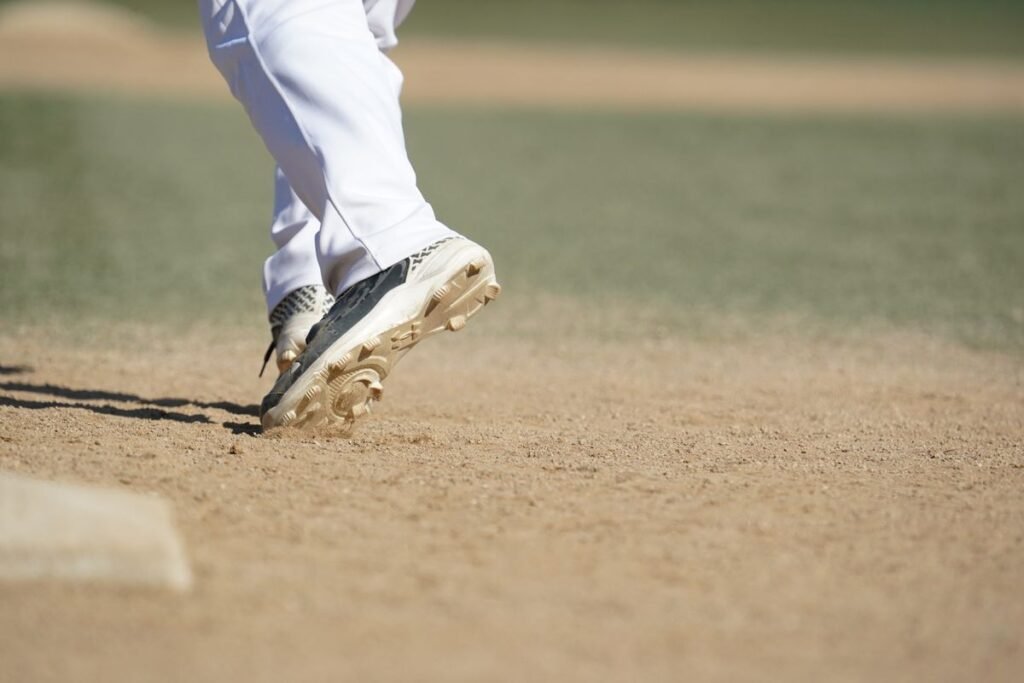
Six Cleats Across Every Surface
The picks cover every plate type in the current metal and molded baseball cleats line.
3000v8 Metal
The core metal cleat. A Fresh Foam midsole is precision-engineered for cushioning, a metal spike outsole provides superior traction on the field, and a comfort collar at the heel adds stability through nine innings.
3000v8 TPU
The same shoe with a TPU molded cleat outsole for strong traction where metal is not allowed. It is the most versatile choice for youth players and adults who play on mixed fields.
3000v8 Turf
Built for practice and turf fields. A nubbed outsole gives a responsive feel and grip on artificial surfaces, with the same Fresh Foam cushioning as the game-day versions.
3000v8 Mid Metal
The metal cleat in a higher cut. It keeps the Fresh Foam midsole and metal spike outsole, with the comfort collar wrapping higher for a more supported feel around the ankle.
FuelCell 4040 v8
The faster-feeling option. A full-length FuelCell midsole delivers a propulsive feel, and a 7-spike outsole plate is configured for traction on quick starts out of the box and around the bases.
4040 Energy
A second version of the same platform, with a full-length FuelCell midsole and a 7-spike plate, for players who like the FuelCell feel in a different look.
Cleat Care Through the Season
- Knock dirt out of the spikes after every game so it does not harden around the plate.
- Let wet cleats air-dry at room temperature; heat warps the upper and weakens the glue.
- Carry a turf pair or trainers for walking to and from the field to save the spikes.
- Replace cleats when the spikes are visibly worn or the plate starts to flex unevenly.
Sizing for Youth Players
Parents often buy cleats a size up so they last the season, but too much room lets the foot slide inside the shoe and blunts the grip the spikes provide. A thumb’s width at the toe is plenty. Check the fit at the start of each season, since growing feet can jump a size over the winter. Molded or turf cleats are usually the right choice for younger players, both because of league rules and because they are more forgiving to walk in. Teach kids to knock the dirt out after games; it is the simplest habit for making a pair last.
The Takeaway
Start with the rules, then the field, then the cut. Metal for maximum grip where allowed, molded for versatility, turf for practice. Choose the right plate and a good pair of molded baseball cleats or metal spikes will carry you through the whole season.
All six cleats above come from the baseball range of New Balance. For more short reads on sport and seasonal kit, browse 2minuteread.