
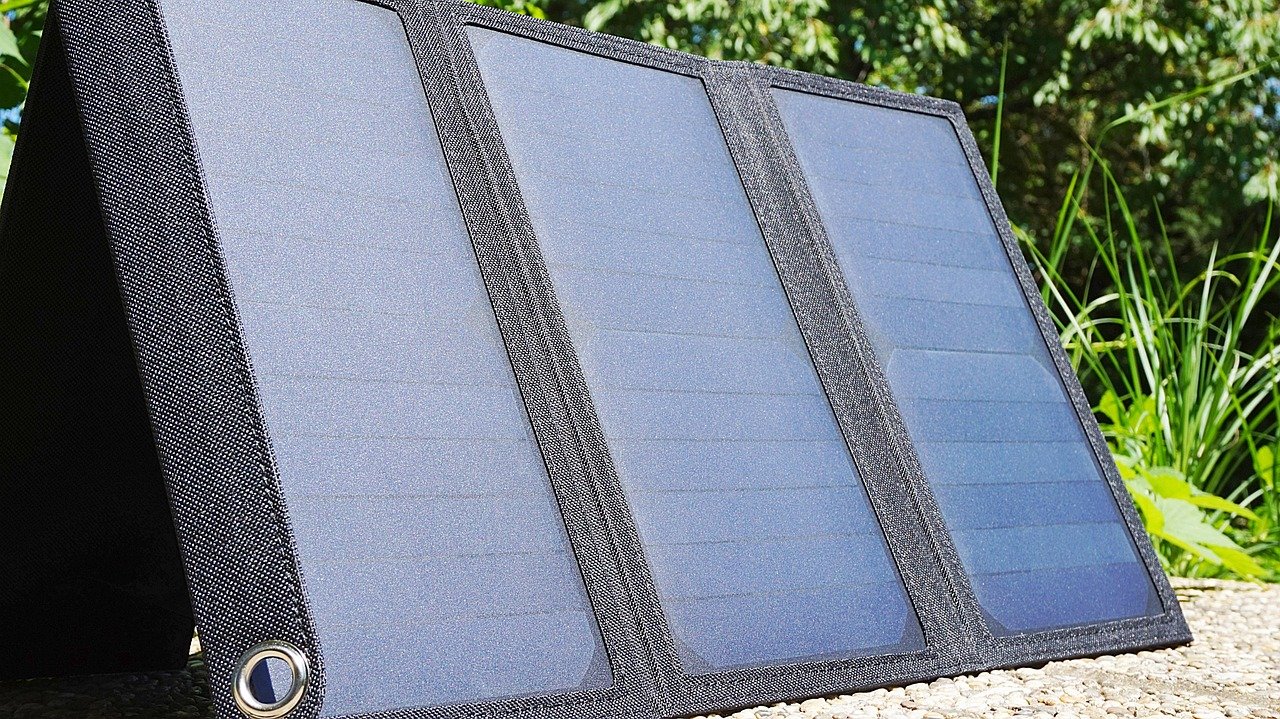
A power station is only as useful as your ability to refill it. On a campsite, at an allotment or on a long road trip, the mains socket is often hours away, and that is where a foldable solar panel earns its place. It packs flat, opens in seconds and turns sunshine into charge for the battery you already carry.
The panels below differ in size, weight and toughness, so the right one depends on how far you carry it and what you need to power. Here is what to compare first, followed by five panels worth a closer look.
What to Compare Before You Buy
| Feature | Why it matters |
|---|---|
| Bifacial cells | Panels with cells on both sides can also capture light reflected from the ground, which helps on bright sand, snow or pale stone. |
| Weight with stand | A panel you carry to a pitch or up a hill should be light enough that you actually take it. |
| Water and dust rating | IP67 handles splashes and showers, IP68 adds protection against dust and heavier exposure. |
| Folded size | A panel that folds to roughly the size of an A4 sheet fits in a backpack or a car door pocket. |
| Connector | Check that the cable matches the solar input on your power station before you head out. |
Five Portable Panels and Who They Suit
Every panel here is listed on the manufacturer’s own store, and each one covers a different kind of trip. If you are still choosing a portable solar panel for your power station, start with how much power you need per day.
For the Biggest Daily Top-Up – PS200 Bifacial Portable Solar Panel
The PS200 is the biggest of these five panels and the one to pick when the power station is big and the days are long. Its bifacial cells collect light on both sides, and it weighs about five kilograms including its stand, around ten percent lighter than the previous version. An IP68 rating protects it against water and dust, and the maker quotes a ten-year lifespan with a five-year warranty. It is the natural partner for a larger station that runs a cool box or laptops through a long weekend.
For Carrying Further – PS100 Bifacial Portable Solar Panel
The PS100 keeps the bifacial design but drops to about three kilograms with the stand, which makes it far easier to carry from the car to a remote pitch. It shares the IP68 protection, ten-year lifespan and five-year warranty of its bigger sibling and comes with two 2.5 metre solar cables plus a short XT60i lead. For couples or solo campers with a mid-sized station, it hits a good balance between output and weight.
For Tight Packing – PS100X Portable Solar Panel
The PS100X is built around compactness. Folded, it is roughly the size of an A4 sheet, so it slides into a backpack or a door pocket. High-efficiency cells reach up to 23 percent efficiency, it is IP67 rated against splashes and showers, and it connects to power stations with an 11 to 60 volt MC4 input. It suits cyclists, van travellers and anyone short on space.
For Phones and Small Gadgets – PS30 30W Solar Panel
The PS30 is a 30 watt foldable panel made for hiking and camping. It is weatherproof and light, and it is meant for devices that draw little power, such as phones, headlamps and small power banks. It is not the panel to refill a large station, but it keeps the essentials charged on a multi-day walk.
For Small Stations – 60W Portable Solar Panel
The 60 watt panel sits between the PS30 and the 100 watt models. It is IP68 rated against water and dust and ships with a 2.5 metre extension cable and an XT-60 lead. Paired with a compact station, it is a light way to add solar charging to day trips and short stays.

Getting the Most From a Portable Panel
- Angle the panel towards the sun and adjust it every couple of hours as the sun moves.
- Keep the surface clean with a soft cloth, since dust and pollen reduce output.
- Avoid partial shade from branches or tent lines, which can cut the charge more than you expect.
- Place bifacial panels over light ground such as gravel or sand so the rear cells collect more reflected light.
- Start charging early in the day so the power station is full before evening.
Wrapping Up
The best portable panel is the one that matches both your power station and the way you travel. Large bifacial panels refill big batteries quickly, compact folding panels save space, and the smallest models keep phones and lights going on foot.
You can compare all five panels side by side at Anker SOLIX, where they are also sold in bundles with power stations. For more practical guides that take only a couple of minutes to read, head back to 2minuteread.